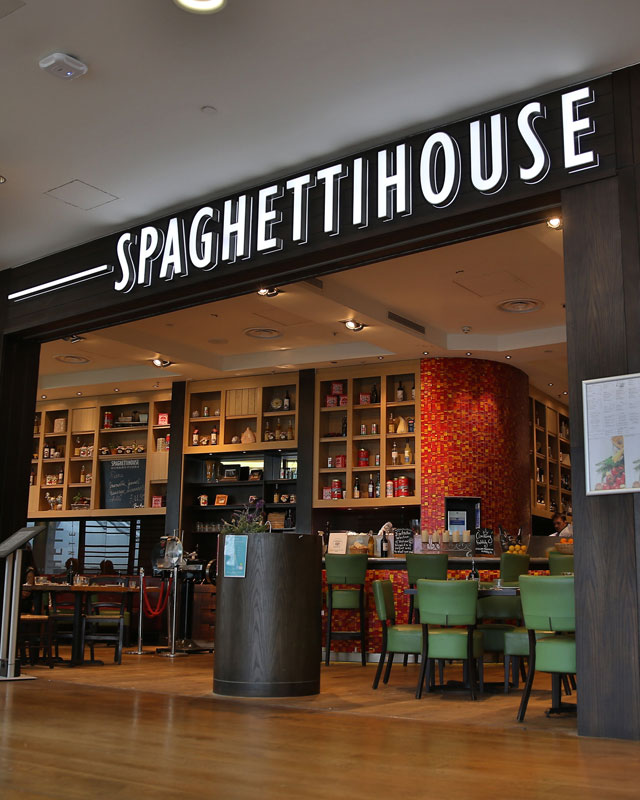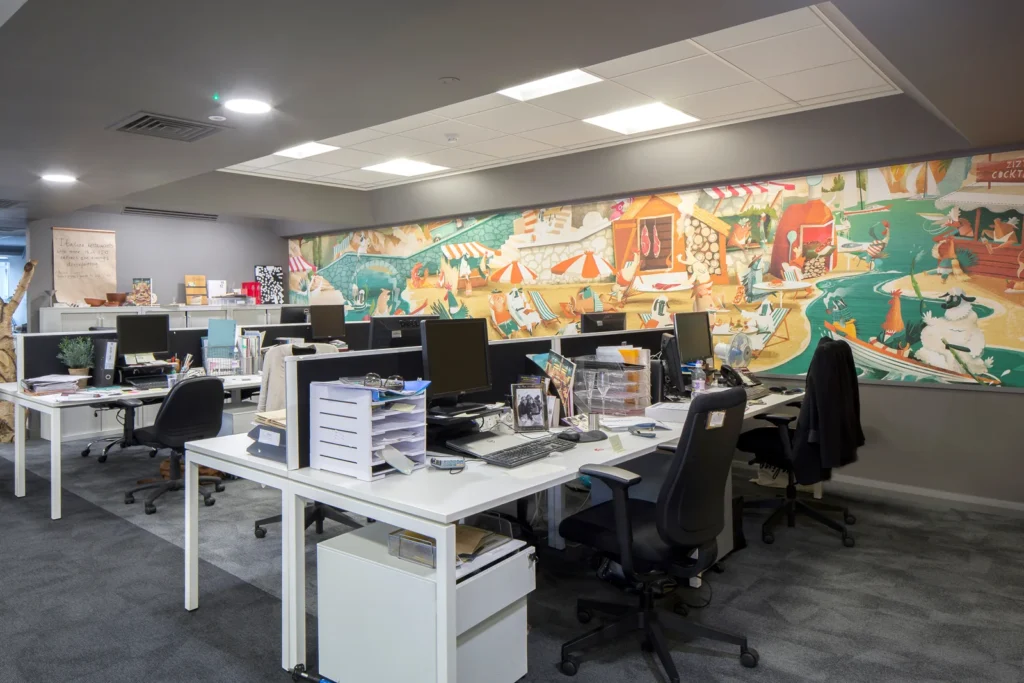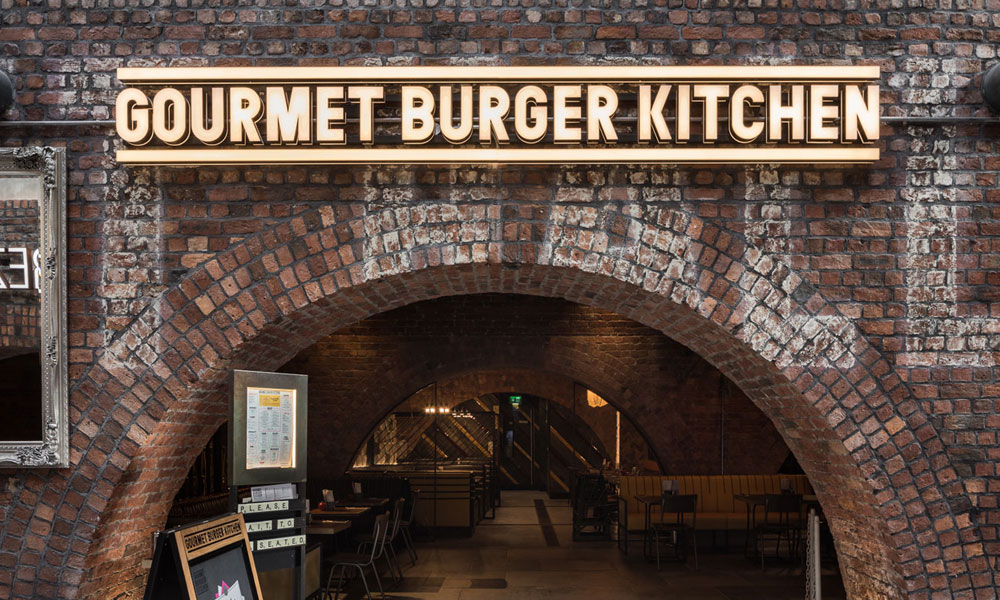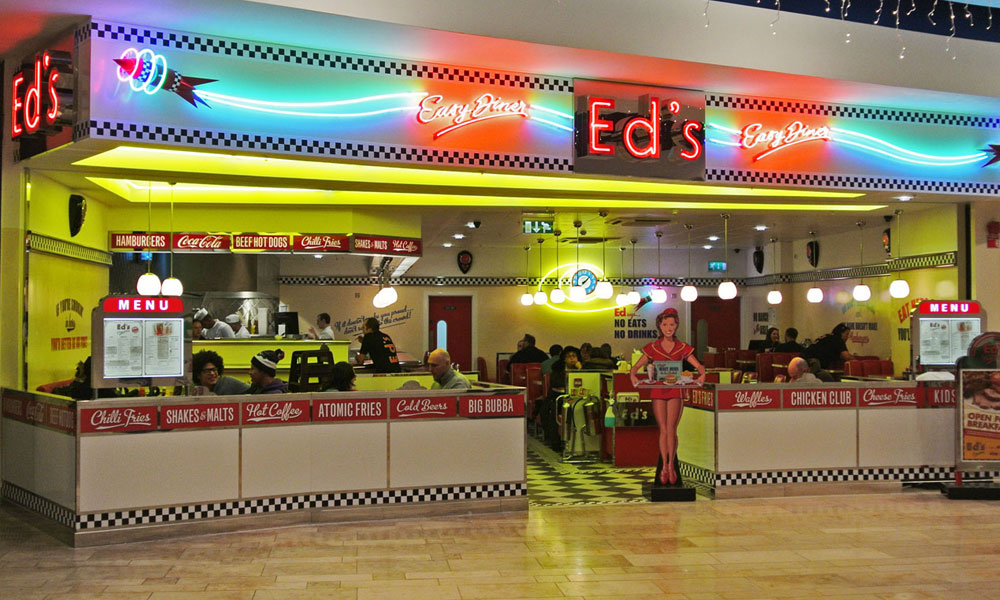

Fascia signs, projecting signs, window vinyls, neon-style features and wayfinding signs each do a different job. For a hospitality business, the right combination helps people spot the venue, recognise the entrance and find their way once inside.
This guide compares five common sign types for cafés, restaurants and bars. Start with what customers need to know at each stage of their visit, then choose the materials, position and lighting that suit your premises and brand.

Fascia signs: identify the business
Fascia signs usually sit above an entrance or across the front of a building. Their main purpose is to display the business name clearly, giving customers a recognisable destination as they approach.
A fascia can use a flat panel, individual raised letters or illuminated lettering. The best option depends on the building, the detail in your logo and how far away people will be when reading it. A sign that works on a design drawing can feel very different above a busy pavement, so consider the full frontage rather than the lettering alone.
Choose this type when you need clear identification from across the street or directly in front of the premises.
Projecting signs: catch the approach along the street
Projection signs, also called projecting signs, extend out from the building. They can help people approaching along the pavement see a venue before its front-facing fascia comes into view.
Keep the message simple: a business name, recognisable logo or clear symbol is often more useful than several lines of small text. Consider how the sign looks from both directions and whether its position competes with neighbouring signs, trees or street furniture.
Choose this type when the main customer approach runs alongside your building, particularly on a street with closely spaced shopfronts.
Window vinyls: add useful information and branding
Window vinyls can display opening hours, a logo, a short message or decorative graphics on the glass. They are useful where customers need information close to the entrance, and can connect the outside of a venue with its interior design.
Decide how much of the view into the premises you want to retain. A small set of opening-hours graphics has a different purpose from a larger branded window treatment. Avoid filling every available pane simply because the space is there: important details should still be easy to find.
Choose this type when you need to make glazing work harder without adding another sign structure to the frontage.
Neon and faux neon: create an interior focal point
Illuminated lettering or a graphic feature can give a bar, café or restaurant a distinctive focal point. A short phrase, brand mark or simple outline is often more effective than a complicated design.
Traditional neon and faux neon use different constructions, so discuss the intended location and appearance before selecting a system. Think about brightness, viewing angles, nearby finishes and how the feature sits within the room’s wider lighting scheme.
Choose this type to reinforce atmosphere and identity. Keep essential visitor directions separate and easy to read.
Wayfinding signs: help customers move with confidence
Wayfinding covers the signs that help customers locate the entrance, reception, toilets, seating or collection point. These signs work best as a coordinated system with consistent wording, arrows and placement.
Walk through the premises as a first-time visitor. Where would you pause or look for help? Place information where a decision is needed, with clear contrast and legible lettering. Check that the directions remain visible when the venue is busy.
Choose this type wherever visitors need reassurance about where to go next, especially in a venue with several rooms or floors.

Build a signage package around the customer journey
A fascia and projecting sign might help customers find the building, window vinyls can explain opening hours, and interior features can establish the atmosphere. Wayfinding then connects those first impressions with a straightforward visit.
Before requesting a quotation, gather photographs of the premises, approximate dimensions, brand artwork and a list of the signs you need. Include any known landlord or site restrictions and explain whether the venue must remain open during installation.
Explore our restaurant and bar signage work, or talk to Technical Signs about your signage brief. We can discuss how the individual elements should work together.