Not every business needs permanent signage from day one. A pop-up shop may occupy a unit for only a few weeks, while a restaurant under refurbishment might need to remain visible behind hoarding. A new launch may also require an immediate solution before final permissions, designs or architectural work are complete.
Temporary signs can provide speed and flexibility, but choosing solely on the lowest initial price may lead to repeated spending or an inconsistent appearance. Permanent signs generally offer greater durability and presence, although they require more planning, manufacture and installation.
The right approach considers how long the sign will be used, where it will be positioned and how it might form part of a future upgrade.
Define how temporary the requirement really is
“Temporary” can mean anything from a one-day event to a year-long trial location. Establish the expected lifespan before choosing materials.
For a weekend activation, portability and rapid installation may be the priorities. A six-month pop-up needs stronger materials, while a refurbishment project may require signs capable of surviving weather, dust and repeated handling.
Consider whether dates, prices or messages will change. A fixed printed panel may be inexpensive, but it loses value if it must be replaced every fortnight. A modular or interchangeable system may cost more initially while reducing later reprinting.
The location matters too. Internal graphics face relatively controlled conditions, whereas exterior signage must cope with rain, wind, sunlight and temperature changes.
A signage company can compare these factors before recommending a format, helping the business avoid paying for unnecessary permanence or an unsuitable temporary solution.
Vinyl graphics for speed and flexibility
Vinyl is one of the fastest ways to apply branding, messaging and decoration to windows, walls, floors and existing panels.
Window vinyl can introduce a pop-up brand, advertise an opening date or maintain privacy during a refurbishment. Designs range from simple cut lettering to full-colour printed graphics and frosted effects.
Vinyl is relatively economical and can often be produced quickly once artwork and measurements are approved. It requires little storage space and does not necessarily need a supporting structure.
The surface must be suitable, clean and correctly prepared. Poor application can result in bubbles, lifting edges or misalignment. Removal should also be considered, particularly on painted walls, delicate finishes or rented premises.
For an upgrade, temporary window vinyl can later be replaced with refined graphics, dimensional lettering or an illuminated fascia while retaining the same visual identity.
A-frames for pavement visibility
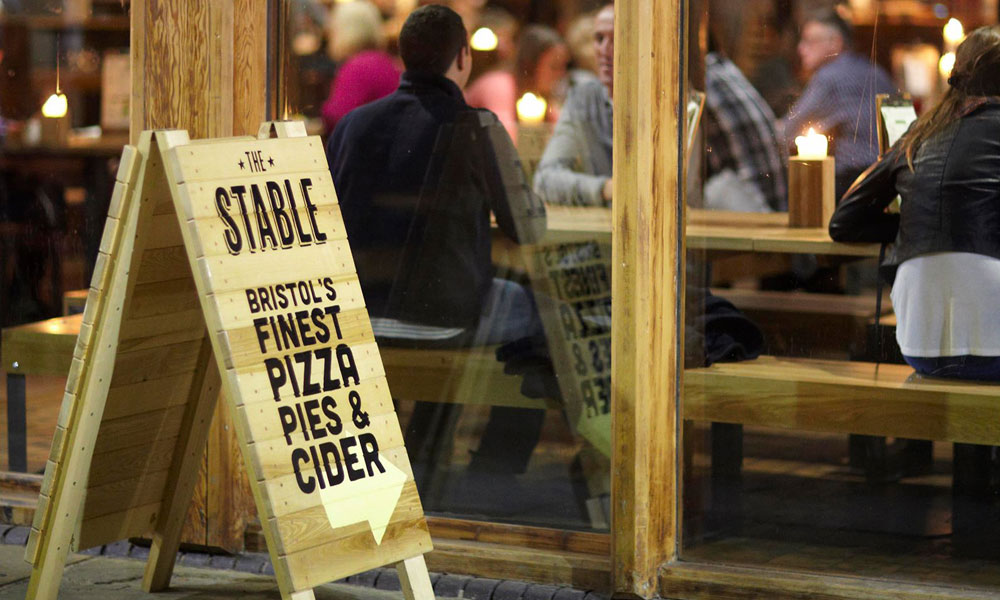
A-frames are portable signs placed outside or near an entrance. They work well for cafés, bars, shops, events and businesses located away from the main pedestrian sightline.
They can display opening information, daily offers, directions or a simple brand message. Chalkboard surfaces suit frequently changing content, while printed panels create a more consistent appearance.
An A-frame generally has a modest cost compared with a fixed external sign and can be produced relatively quickly. It is also reusable if the message is designed without fixed dates or short-lived offers.
However, pavement placement must be managed responsibly. The sign should not obstruct pedestrians, wheelchair users or pushchairs, and local restrictions may apply. Wind resistance, stability and daily storage are practical considerations.
As an upgrade path, an A-frame can remain useful after permanent fascia or projection signs are installed, shifting its role towards daily promotions and menus.
Printed boards and hoarding during refurbs
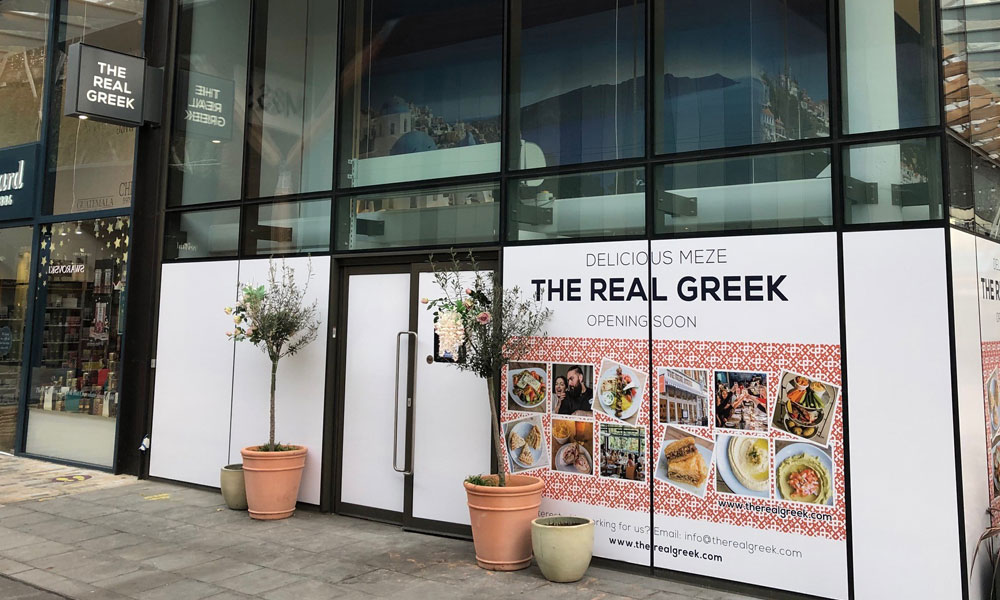
Printed boards offer a straightforward way to cover empty units, construction areas and temporary walls. They can carry large-scale branding, opening dates, directional information and campaign artwork.
For a refurbishment, hoarding signage turns an unattractive barrier into useful advertising. It can build anticipation, explain what is changing and reassure customers that the business will return.
Board systems are usually quicker and less expensive than permanent fabricated signs, although the final cost depends on size, material, finish and installation access.
Content should remain simple enough to read while people are moving. A logo, short message and clear date will often achieve more than a crowded list of everything the renovated venue will offer.
The graphics can introduce the colours and typography planned for the permanent scheme, creating continuity between construction and launch.
Modular signs for changing businesses
Modular signage uses frames, rails, panels or other replaceable components. It sits between fully temporary graphics and completely bespoke permanent fabrication.
This approach suits multi-tenant buildings, seasonal venues, markets and businesses that expect names, prices or messages to change. The main structure remains in place while individual inserts are updated.
The initial cost can be higher than printing a simple board, but future changes may require only a replacement panel. This makes modular systems economical when updates are frequent.
A well-designed frame can also look more professional than repeatedly attaching temporary posters or vinyl over old information. Materials and colours can be matched to the surroundings, while replaceable graphics retain flexibility.
For a growing brand, the system might begin with printed inserts and later accommodate dimensional lettering, lighting or higher-quality material finishes.
Light boxes for a stronger long-term presence
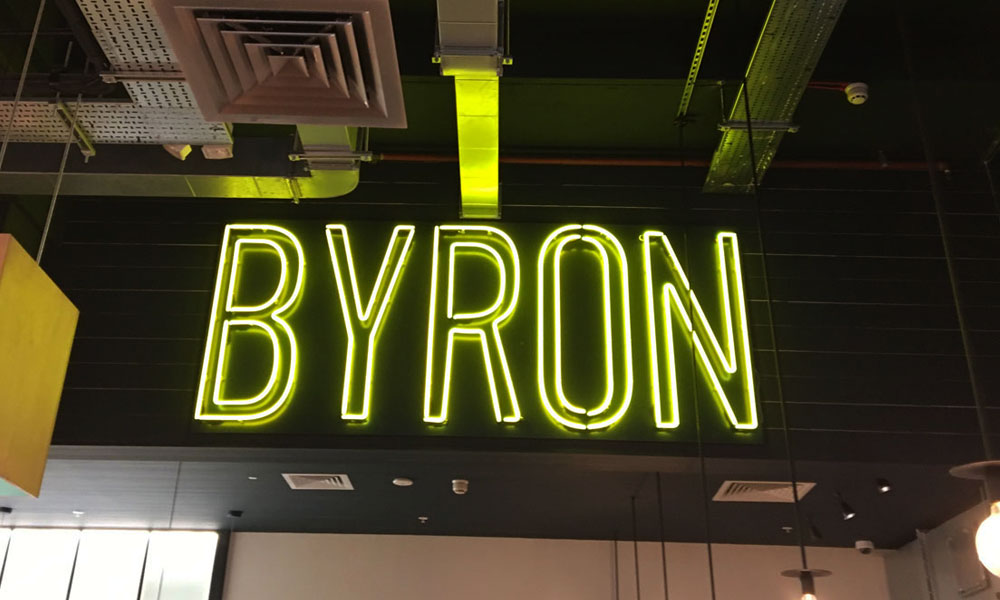
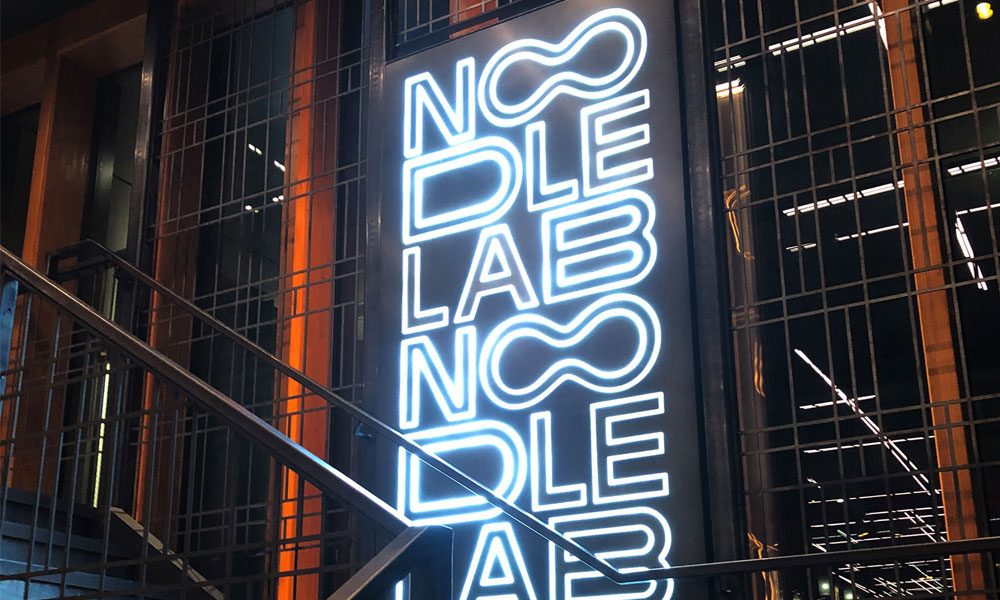
Light boxes provide illuminated visibility and are particularly effective for retail, hospitality and takeaway businesses trading after dark.
They require more planning than vinyl or an A-frame because the cabinet, face, fixings, electrical supply and installation must be coordinated. External illumination may also involve permissions or landlord approval.
This generally makes a light box slower and more expensive than basic temporary options. Its durability and visibility can justify the investment when the location is expected to trade for several years.
Replaceable faces offer some flexibility. A standard cabinet can receive updated graphics if the brand changes or a new tenant occupies the space, although the dimensions and lighting must remain suitable.
A temporary launch might begin with window vinyl and a freestanding sign, then progress to a projecting or fascia-mounted light box once the location has proved successful.
Speed depends on more than manufacture
Businesses often ask which sign can be produced fastest, but artwork, surveys and approvals may take longer than the physical printing.
Vinyls, posters and flat panels typically offer the quickest route where measurements and print-ready artwork are available. A-frames can also be fast if an existing structure accepts standard-sized graphics.
Bespoke frames, light boxes and fabricated lettering require more design and production time. Electrical work, access equipment and structural fixings add further stages.
Planning early protects the launch date. Even when the permanent scheme cannot be installed immediately, a temporary package can be designed as the first phase rather than an improvised substitute.
Compare lifetime value, not only price
The cheapest option is not always the best value. A temporary banner repeatedly replaced over a long refurbishment may cost more than a durable panel system.
Consider design, production, installation, maintenance, storage and removal. A reusable A-frame or modular structure may support several campaigns, while dated vinyl has little value after one event.
Permanent signage should also justify its cost through visibility, durability and brand presence. Premium fabrication is unnecessary for a three-week pop-up, but it can be commercially sensible for a flagship location.
Set a budget for the complete journey from opening to established operation rather than treating every stage as an unrelated purchase.
Build a sensible upgrade path
A practical sign strategy can develop in stages:
- Begin with window vinyl, printed boards and an A-frame for rapid launch visibility.
- Introduce modular signs where information changes regularly.
- Add permanent fascia, projecting or illuminated signs once the location and brand requirements are confirmed.
- Retain portable and interchangeable elements for promotions, events and seasonal messaging.
Using consistent colours, typography and proportions ensures that each phase feels intentional. Temporary signs should look like an early expression of the brand, not a completely different identity.
Choose for today while planning for tomorrow
Pop-ups, refurbishments and launches require signage that can respond to changing timescales and budgets. Vinyl offers speed, A-frames provide portable street presence, modular systems support regular updates and light boxes create a lasting illuminated identity.
The strongest choice is based on lifespan, environment and future use rather than the word “temporary” or “permanent” alone.
By discussing the complete upgrade path with an experienced signage company, businesses can open quickly without wasting early investment. Temporary solutions can support immediate trading, while a planned transition towards permanent signage builds stronger visibility as the location develops.