Construction hoardings have an important practical purpose. They separate the public from building work, protect the site and help control access. However, they also create a large and highly visible surface that may remain in place for months.
Untreated timber, faded posters and loosely attached banners can make a project feel neglected before it is finished. Well-designed hoardings have the opposite effect. They can create anticipation, explain what is happening and demonstrate that the developer or incoming business cares about the surrounding area.
The strongest schemes combine clear communication with high-quality design and robust production. They acknowledge that hoardings are temporary structures while recognising that, for local people, they may become part of the streetscape for a significant period.
Treat the Hoarding as a Public-Facing Installation
Hoardings are often one of the first completed elements of a construction project. They may appear before the building takes shape, the interior is fitted or permanent shop fascias are installed.
This makes them an early opportunity to establish standards. Clean lines, accurate graphics and well-managed information suggest an organised project. Poorly maintained panels can create concerns about disruption, safety and the quality of the eventual development.
The design should be considered from the viewpoints of pedestrians, drivers, neighbouring businesses and local residents. A long frontage may require a sequence rather than one repeated graphic. Corners, entrances, viewing windows and changes in ground level must also be incorporated.
Site boundaries can be extensive, but that does not mean every metre needs to carry a message. Areas of visual breathing space allow important information and images to have greater impact.
Build Anticipation Without Revealing Everything
Hoardings can introduce an incoming business or development gradually. Early graphics might focus on the overall vision, followed by more detailed messages as the opening approaches.
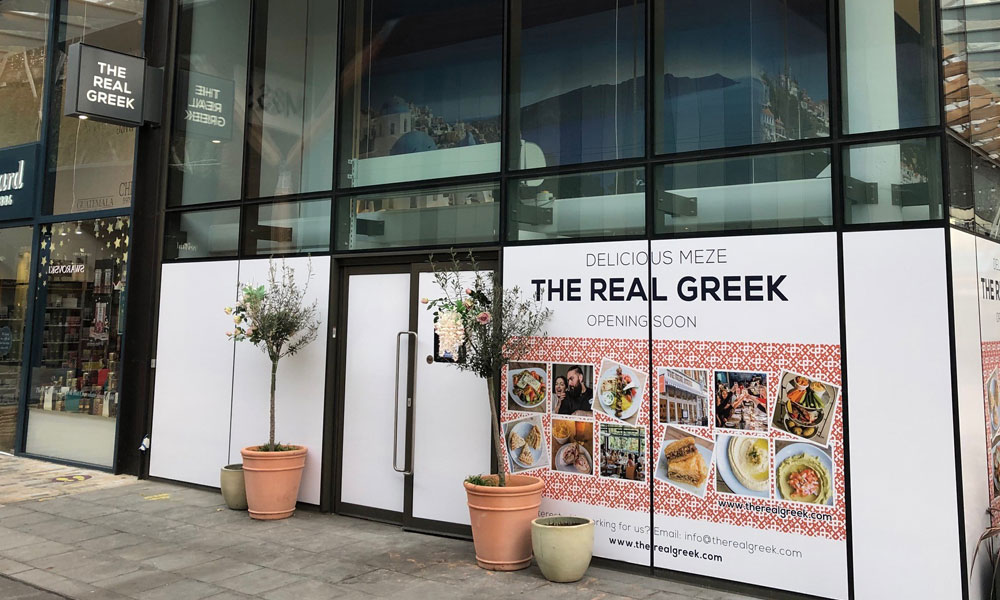
A restaurant could begin with close-up images of ingredients, materials or interior details before revealing the full concept. A retail development may introduce the character of the destination, then announce individual brands as agreements are confirmed.
Phrases such as “Opening this autumn” can create interest, but they should be supported by something distinctive. Generic promises about an “exciting new experience” are easily ignored. Strong imagery, recognisable brand elements or a clear explanation of what the development will bring provide a more persuasive reason to pay attention.
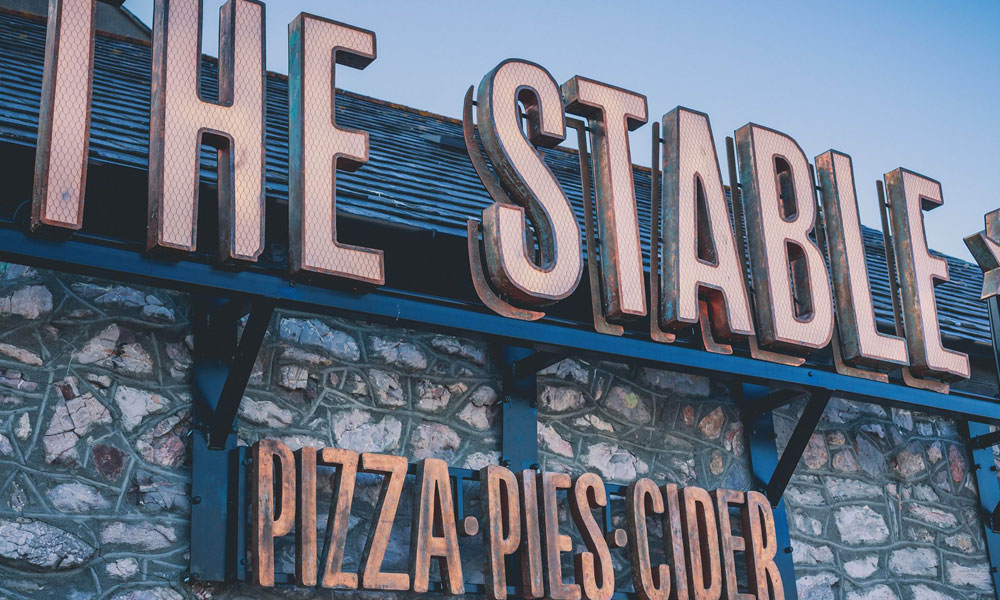
Bespoke signs, dimensional lettering or illuminated details can be incorporated at prominent points where the budget and site conditions allow. These features can turn an ordinary perimeter into a memorable preview of the completed environment.
Communicate Timelines Honestly
People living and working near a construction site want to know how long the disruption is likely to continue. Hoardings can provide useful information, but dates must be managed carefully.
A precise opening day may create problems when building programmes are still subject to change. Broader wording such as “Opening spring 2027” provides some flexibility while still giving the public a meaningful indication.
Where a project has several phases, a simple timeline can show what has been completed and what happens next. Construction terminology should be translated into plain English so that people outside the industry can understand it.
Information needs to be updated when circumstances change. Leaving an expired completion date on display makes the scheme look poorly managed and can frustrate neighbours who expected work to finish.
Design the relevant panels so they can be replaced independently. This avoids reprinting the entire hoarding every time an opening date, tenant or project milestone changes.
Explain the Value to the Local Area
Construction work creates noise, dust, traffic and temporary changes to access. Hoardings cannot remove these effects, but they can show why the work is taking place and what the finished development will contribute.
Messages might highlight new jobs, restored buildings, improved public spaces, community facilities or more accessible services. Claims should be specific and supported rather than relying on vague language about regeneration.
Local history can also provide meaningful content. Archive photographs, maps and short stories can connect the development with the site’s past. Where historic buildings are being retained or repaired, the hoarding can explain the conservation work taking place behind it.
For large projects, developers may invite local artists, schools or community groups to contribute. This can create genuine ownership, provided participants are properly credited and the collaboration is not treated as a superficial promotional exercise.
The result should give people something useful or enjoyable to engage with during the construction period.
Help People Navigate Around the Site
A building project can disrupt familiar routes and make nearby businesses harder to find. Clear directional information is therefore an important part of the design.
Pedestrian diversions, temporary entrances and accessible routes should be displayed prominently and updated whenever the site layout changes. Directions need to remain visible in busy conditions and should not be hidden among promotional content.
If neighbouring businesses remain open, the hoarding can reassure customers and point towards their entrances. Messages such as “Open as usual” are more effective when accompanied by a clear arrow and business name.
Site contact details should also be available for people who need to report an issue or ask a question. Emergency information and statutory notices must remain separate from decorative graphics so they can be located quickly.
Select Materials for the Full Installation Period
A hoarding may look excellent when first installed but deteriorate quickly if the materials are unsuitable. Wind, rain, sunlight, dust and accidental impact all affect its appearance.
Printed panels should use exterior-grade materials, inks and protective finishes appropriate to the expected lifespan. Anti-graffiti laminates may be valuable in vulnerable locations because they can make cleaning easier and reduce the need for immediate replacement.
Panel joints, edges and fixings need careful attention. Misaligned artwork or lifting corners immediately create a temporary appearance. Graphics should be planned around panel sizes so that faces, lettering and important details are not divided awkwardly.
Matt or low-glare finishes can improve readability, particularly where the hoarding receives direct sunlight or is positioned near traffic. Fire performance and any site-specific safety requirements should also be considered when specifying materials.
Coordinate Hoardings with the Permanent Brand
Temporary graphics should provide a bridge to the completed site. Colours, typography and imagery can introduce the identity that will later appear across interiors, wayfinding and shop fascias.
This does not require reproducing the final signage at full scale. The hoarding can use fragments of the visual language, allowing the brand to emerge progressively. When the permanent frontage is revealed, it then feels like the fulfilment of an established story.
If several tenants are involved, create rules governing logo size, spacing and placement. Without a shared system, the frontage can become a crowded collection of competing brand marks.
The signage company should work with developers, architects and marketing teams to ensure dimensions and artwork correspond with physical site conditions. Designs created without accurate surveys can fail around gates, corners and structural supports.
Maintain the Hoarding, Not Just the Site
Even durable hoardings need regular attention. Dirt, graffiti, damaged panels and outdated notices should be addressed promptly.
Add the hoarding to routine site inspections. Check fixings, edges, lighting and viewing windows, as well as the condition of printed surfaces. Posters attached without approval should be removed carefully so they do not damage the finish.
Ground-level areas are particularly vulnerable to mud and impact, so darker colours or replaceable lower panels may be practical. Site teams should also avoid stacking materials, bins or barriers in front of key messages.
A clear maintenance responsibility prevents the appearance from declining once the initial installation has been completed.
Turning a Boundary into a Brand Experience
Construction hoardings do not need to look disposable. With thoughtful content, quality materials and planned maintenance, they can improve the appearance of a site throughout the building programme.
The best examples create anticipation without making unreliable promises, explain the project in accessible language and acknowledge its effect on the community. They also support navigation and prepare audiences for the permanent identity, from interiors and wayfinding to finished shop fascias and bespoke signs.
A hoarding may be temporary, but the impression it creates can influence how people view the development long before the doors finally open.